Where do I put the dish? Starlink, Revit and a bit of orbital mechanics. Will 15 million positions be enough?
When we moved into the new house, I had to decide where the Starlink dish would go.

26 articoli · (BIM OR Blockchain OR Programmazione OR Scripting) AND NOT Libri AND NOT Normativa
When we moved into the new house, I had to decide where the Starlink dish would go.
Con il trasloco nella casa nuova c’era da decidere dove mettere la parabola di Starlink.
It all started with Autodesk’s announcement that older versions of Revit (2021 and earlier) would no longer be supported by Autodesk Forma (formerly Autodesk Construction Cloud).

Tutto è nato dall’annuncio di Autodesk che le vecchie versioni di Revit (dalla 2021 in giù) non sarebbero più state supportate da Autodesk Forma (il vecchio ACC).
In BIM (Building Information Modelling) we fall in love with technology fast. But if data isn’t born to answer specific decisions, it stays as elegant choreography.
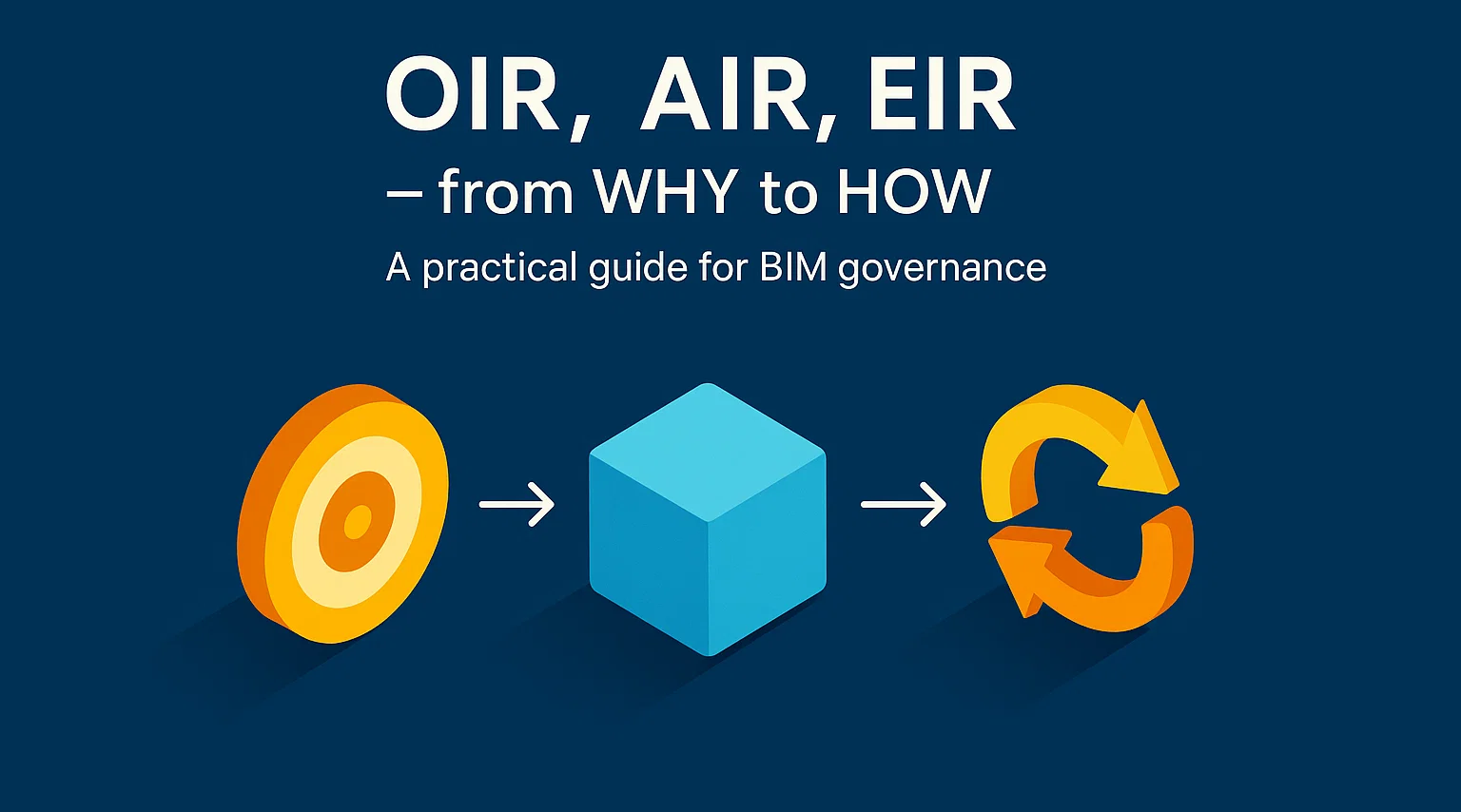
Nel BIM ci innamoriamo facilmente della tecnologia. Ma se i dati non nascono per rispondere a decisioni precise, restano coreografie eleganti. È qui che il trio OIR → AIR → EIR fa la differenza.
Ogni progetto parte da una promessa: «questa volta i dati saranno in ordine». Poi apri il modello e scopri che “porta” si chiama “door_01_finalissima_v3”. Succede perché manca una mappa.

Every project starts with a promise: “this time the data will be tidy.” Then you open the model and learn that “door” is called “door_01_finalissima_v3.” That happens because there’s no map.
In the world of BIM, one of its fundamental principles is often repeated: “begin with the end in mind.”
Un’affermazione troppo audace? Forse no.